8–10 weeks minimum between touch-ups – sometimes longer. The longer the gap, the more peptide deposit has compounded and the better your hair holds up to the next service. Don’t retouch before week 6 without stylist direction.
Routine for Relaxed Hair
Routine – Relaxed Hair
Relaxed, not weakened.
Relaxers permanently restructure the cortex and raise porosity for good. This is the peptide routine built for relaxed hair – different chemistry, different damage, a longer recovery.
The damage
Bonds altered, porosity raised for good
Your tools
Atomic + Renew + AquaLush
Retouch
Every 8–10 weeks minimum
Note
Longer recovery than bleach
Your routine essentials
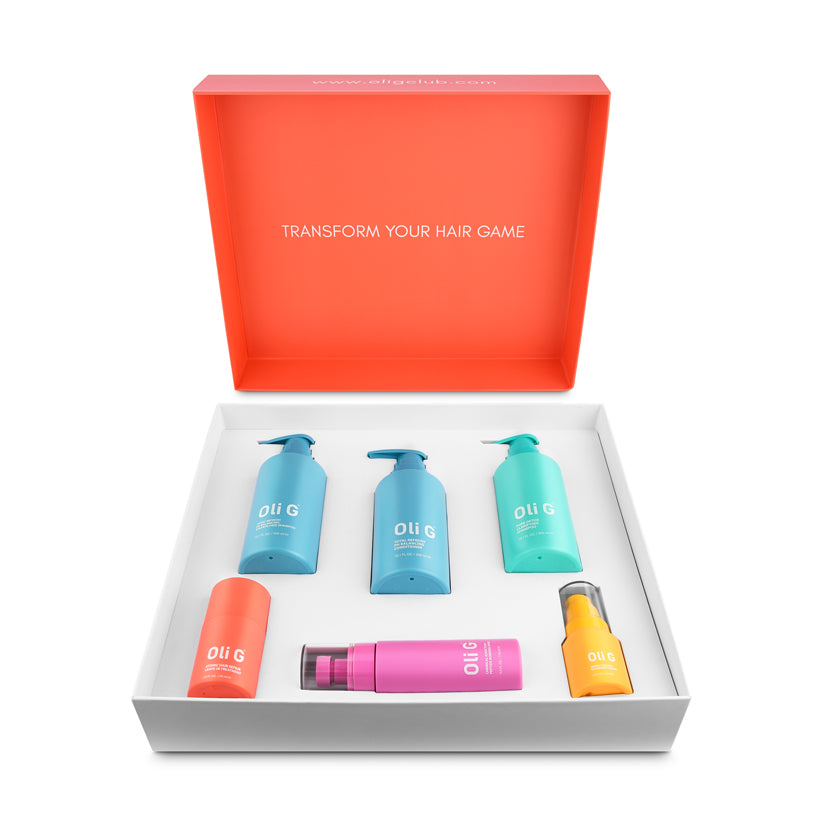
Four products. One routine.
01 – What happened
What relaxer does to your hair
- Disulfide bonds are permanently altered. The chemistry straightens by restructuring protein – bonds that don’t all reform.
- Porosity is raised for good. Relaxed hair holds higher porosity than virgin hair indefinitely. It never fully reseals.
- Polypeptide chains weaken. The protein backbone loses integrity in the restructuring process.
- Scalp oil distribution changes. Even slight curl reduction changes how sebum travels down the strand – ends run dry faster.
Relaxed hair needs more than regular conditioner. It needs peptides – consistently, on every wash day.
02 – The routine
Your recovery routine.
From service day to long-term maintenance.
Atomic Leave-InRenew OilAquaLush MaskTotal RefreshPure Detox
Day of service
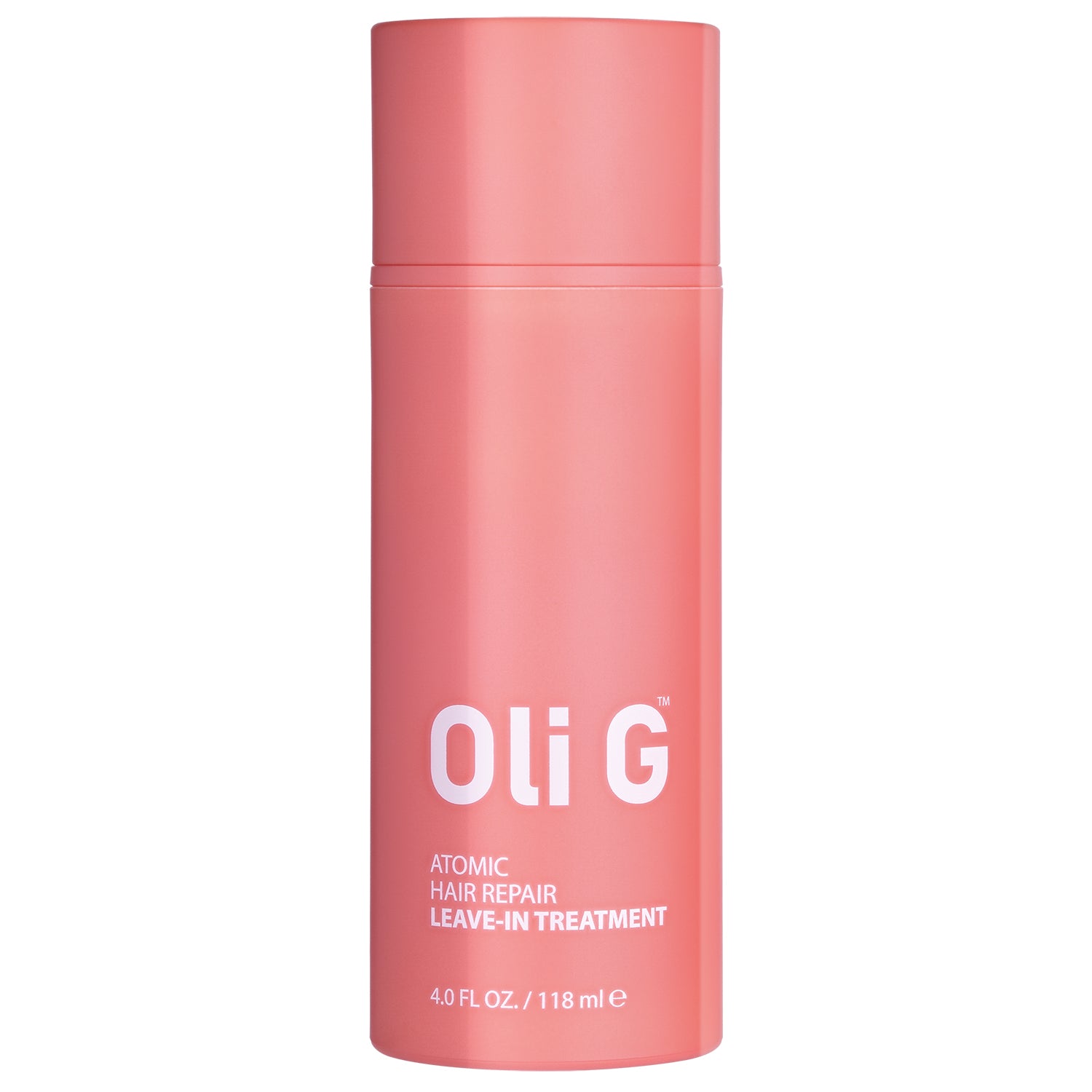
Atomic Hair Repair Leave-In on damp hair – 2 to 4 pumps, same day as the relaxer. The cuticle is open and peptides deposit at their highest rate right now.
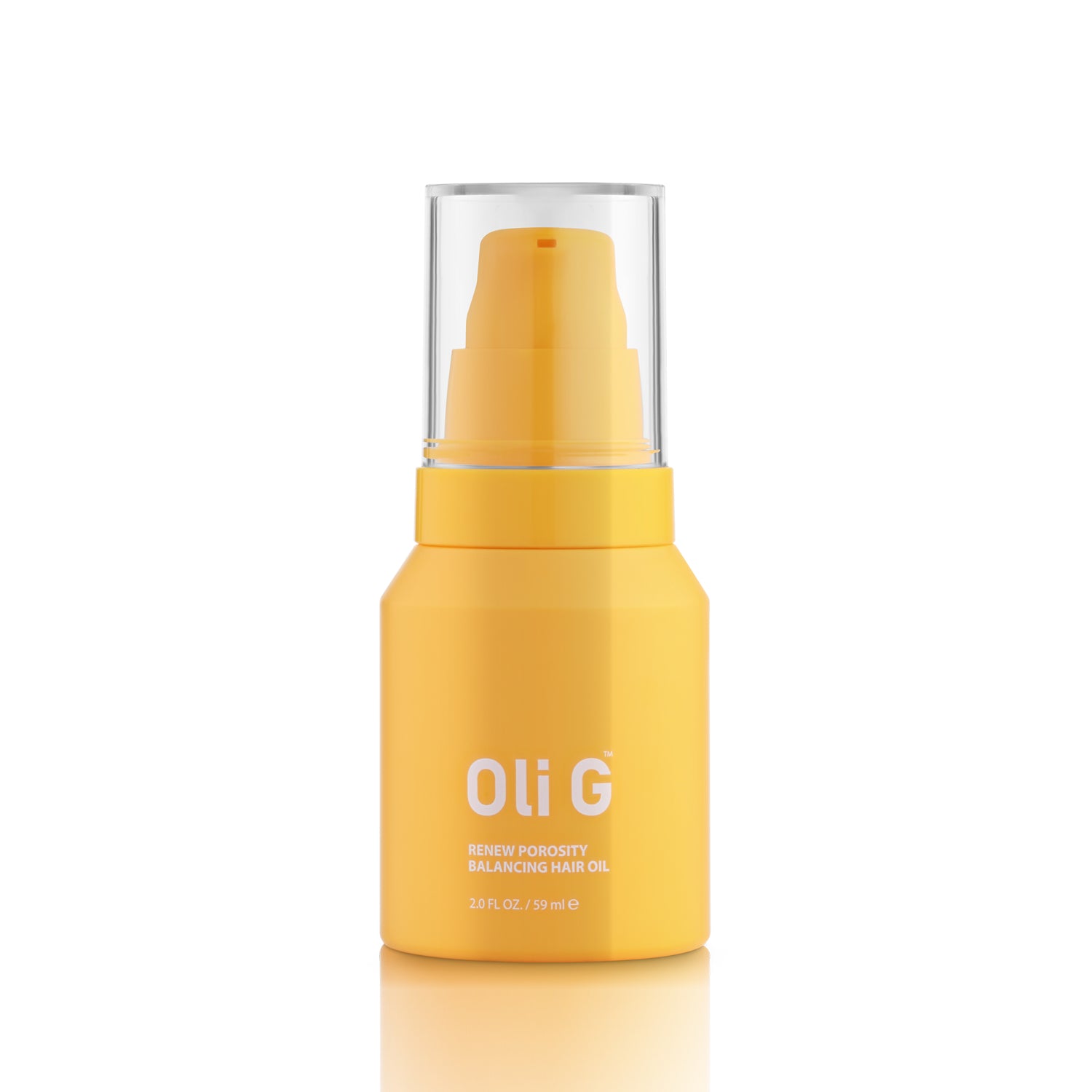
Renew Porosity Balancing Oil on the entire length – 3 to 5 drops. Relaxed hair benefits from oil coverage beyond just the ends. No heat for 48–72 hours – air dry or wrap.
Week 1 – active recovery
Wash every 5–7 days. On each wash day:
1


Pure Detox lifts service residue while the cuticle is still open – safe to use immediately after a relaxer. Follow with AquaLush as a 10-minute deep treatment, then rinse.
2

Atomic Hair Repair Leave-In
2 to 4 pumps on damp hair.
3

Renew Porosity Balancing Oil
3 to 5 drops on the entire length – mid-lengths and ends, not just ends.
Between wash days
- Add Renew on ends if they feel dry or rough between washes — and wrap in silk or satin overnight.
- Mid-week: spritz with water if dry, small amount of Atomic on dry areas.
Weeks 2–3
Switch from Pure Detox to Total Refresh Shampoo + AquaLush each wash — use AquaLush as your conditioner substitute on wash days during this recovery window. With a 5–7 day wash cadence, this stays in the weekly treatment range. Continue Atomic and Renew every wash. By the end of week 3, hair should feel meaningfully different from the immediate post-service state.
Week 4 and beyond
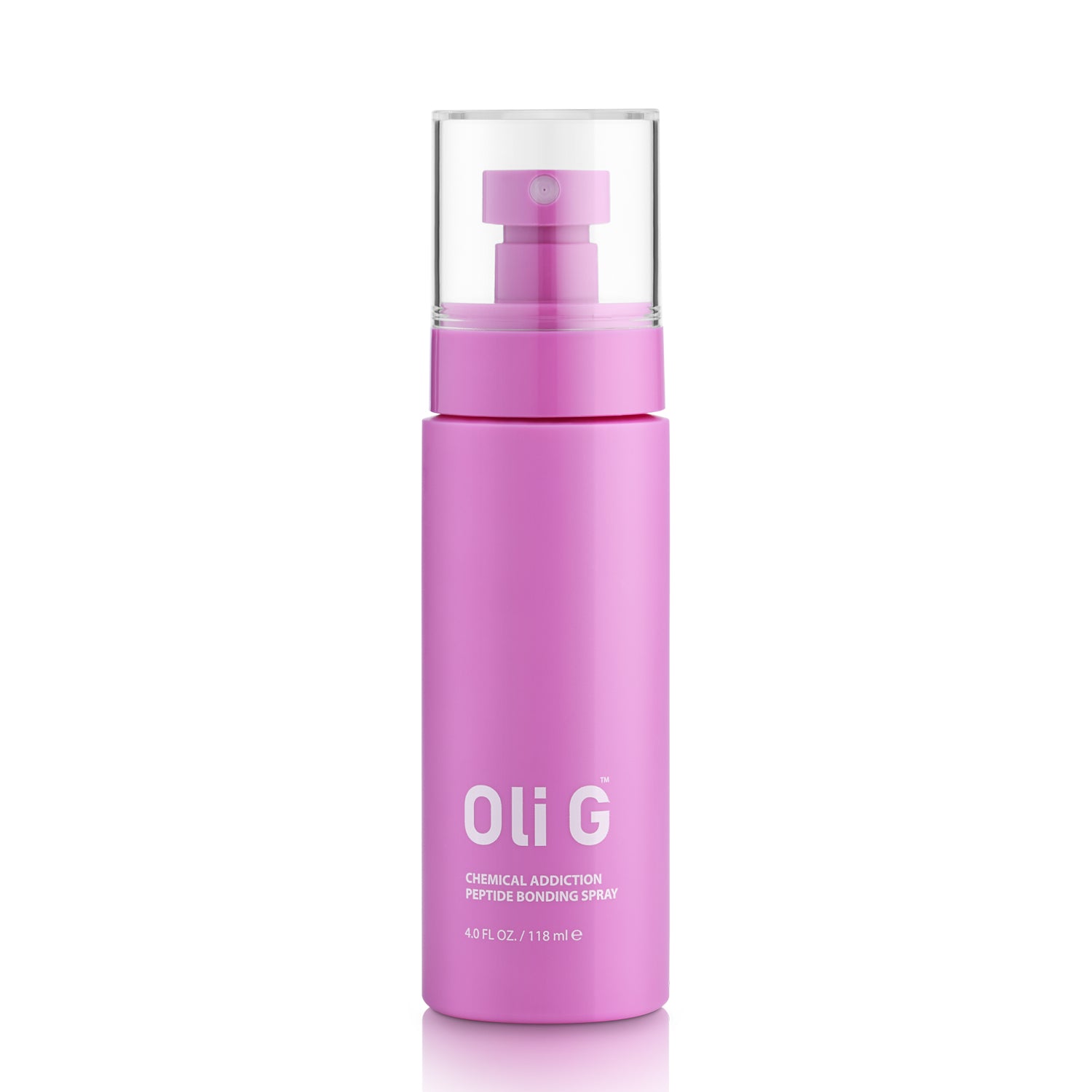
Your long-term relaxed-hair rhythm: Total Refresh on most wash days, AquaLush once a week, Pure Detox every 2–3 weeks, Atomic on damp hair after washing, Renew on mid-lengths and ends, and Chemical Addiction before heat. Add Renew nightly on ends only if they feel dry or rough between washes.
03 – What to expect
Results, week by week.
Week 1
Less stripped. Pliability returns.
Week 2
Less shedding. Detangling is smoother.
Week 3
Strength noticeably improved. Cuticle laying flatter.
Week 4+
Hair behaves more resilient. Holds styles longer. Less breakage.
04 – Retouch timing
When to retouch.
05 – Guardrails
What to avoid.
- Layering chemical services. No bleach, color, or retouch within four weeks of the initial service.
- Heat without Chemical Addiction. Always apply first, and drop tool temperature 20–30° in the first four weeks.
- Tight styles too soon. Wait two weeks post-relaxer before braids, sew-ins, or tension-based styles.
- Skipping Renew. Relaxed hair needs daily lipid replacement on the ends.
- Hot-water washing. Lukewarm only.
Also bleached or colored?
AquaLush twice a week for the first four weeks. Skip Pure Detox for the first three. Extend your recovery window by two weeks before going back to maintenance.
Also in a protective style?
Braids, twists, locs, or sew-ins?
Your Routine
Relaxed Hair Routine
Four products built for permanently restructured hair. Peptide repair, lipid replacement, deep treatment, and a weekly reset.
Restore
Atomic Leave-In Treatment
$65
Nourish
Renew Porosity Balancing Oil
$40
Hydrate
AquaLush Peptide Hair Mask
$39
Cleanse
Pure Detox Clarifying Shampoo
$30
As seen in · People · CNN · Beauty Launchpad · American Salon · The Tease | 2025 Prevention Hair Award — Best Nourishing Cream
“Relaxer is a permanent chemical restructuring. The hair doesn’t bounce back on its own — and most of the premium peptide category hasn’t built protocols for it. This system has a full pre-relaxer and post-relaxer sequence, tested on real clients at the chair, not developed in a lab and handed to a stylist to figure out.”
Katie Brenner · Global Artistic Director & Educator
✓ Made in Miami
Formulated and bottled in the United States.
✓ Pro-tested
Used by licensed stylists at salons across the US.
✓ No animal testing
Never has. Never will.
✓ 30-day returns
Full refund within 30 days of receipt. US domestic orders.