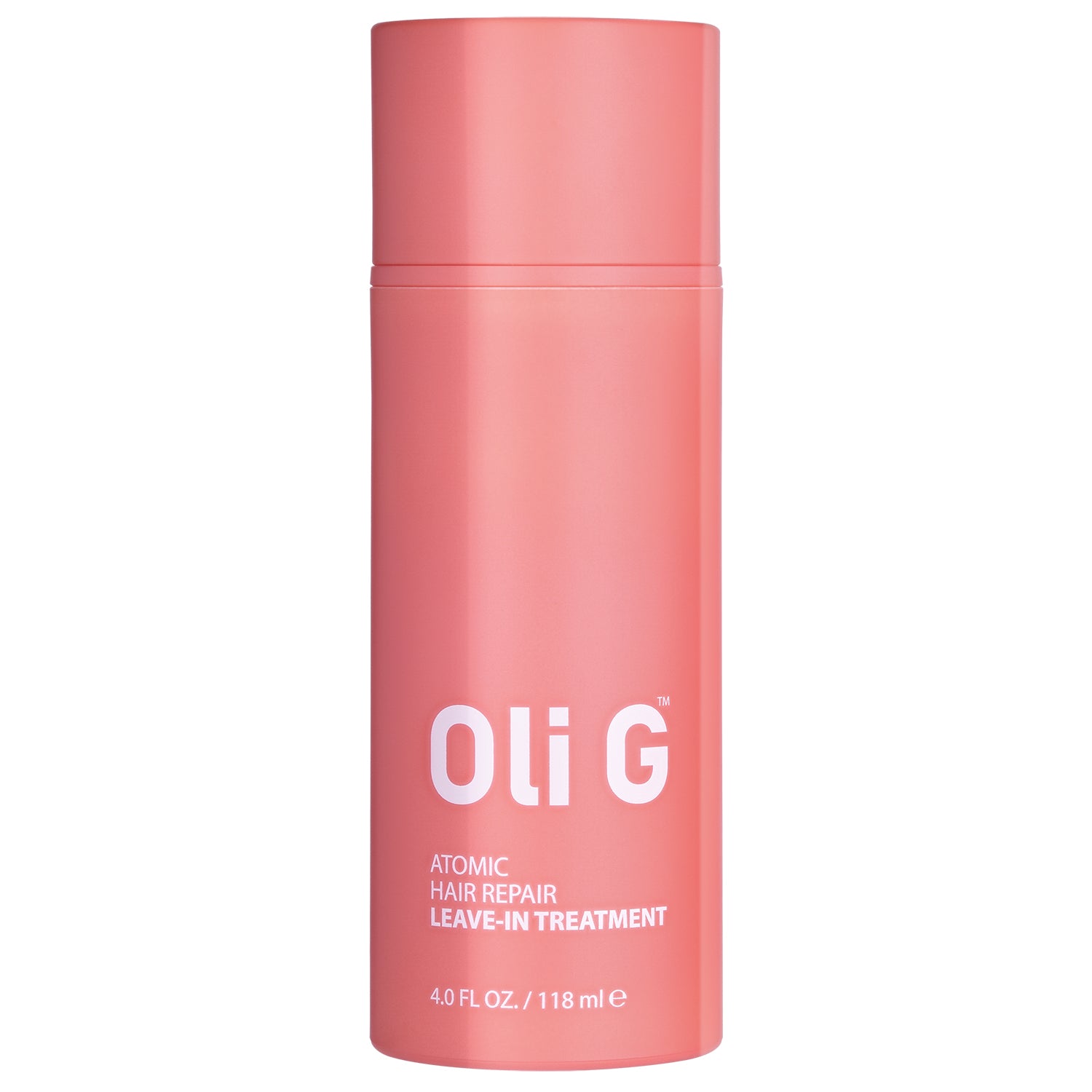
A line-by-line walk through every working ingredient in our hero leave-in. No marketing. Just what it is, what it does, and why it's there.
Brands love to talk about what's not in their products. Less interesting than what is. So here's the entire functional ingredient list of Atomic Hair Repair Leave-In — the 2025 Prevention Hair Award winner — in plain language, in the order it actually does work on your hair.
If you've ever read an INCI list and felt like you were reading the back of a vitamin bottle in Latin, this is the translation.
The carrier: water and a few helpers
Like almost every leave-in worth using, Atomic starts with water. Water is what lets every other ingredient distribute evenly through your hair. It's followed by a small amount of behentrimonium methosulfate — a mild, plant-derived conditioning surfactant — that gives the formula its slip. Slip is what makes a leave-in spread instead of clumping in one spot.
This is also the layer that opens the cuticle just enough for the active ingredients further down the list to actually get in. Without it, the proteins and peptides would sit on the surface and rinse away.
The hero work: two peptides
This is where the real repair happens, and it's where most "leave-in" products under-deliver because their active proteins are either too large to penetrate or too small to do anything once they get in. Atomic is built around two peptides specifically chosen to work at two different depths of the strand.
The first peptide is small enough to penetrate the cortex and bind to gaps along the keratin chain. This is the structural work — the reason the strand starts behaving stronger over a few wash cycles.
The second peptide sits on the cuticle surface, smoothing the outer layer and reflecting more light. This is the visible part — the reason hair looks shinier after the first application.
Two peptides, two sizes, two different jobs. That's what we mean when we say two peptides, one leave-in. It's also why Atomic doesn't trigger the protein-overload backlash that single-protein formulas often do.
The hydration layer: panthenol and humectants
Once the peptides are in place, the strand needs water bound to them — or you're back where you started in three days. The hydration ingredients in Atomic do two things: pull moisture in from the air, and hold moisture already inside the strand.
Panthenol (provitamin B5) is the workhorse. It penetrates the cortex, converts to pantothenic acid, and binds to the proteins along the keratin chain. It also coats the cuticle, which is what gives that supple, "looks healthy" feel after the first application.
Glycerin is the humectant. It pulls water in from the surrounding air, which is great in moderate humidity and a nightmare in extreme humidity — which is why we balanced the formula with sealing ingredients further down. If you live in Miami and have been burned by humectant-heavy leave-ins that go fuzzy on you by noon, this part of the list handles it.
The seal: light cuticle agents
The last functional layer is the cuticle seal. Atomic uses a small amount of cetyl alcohol (a fatty alcohol — gentle, conditioning, despite the misleading name) and a conditioning polymer that lays the cuticle flat without building up.
This is the layer that makes Atomic feel "weightless" — fine-hair clients have been burned by leave-ins that promise lightness and deliver a film. The polymer we chose specifically does not. It seals on contact and rinses cleanly the next wash.
What's not in it (briefly)
For the record: no sulfates, no parabens, no synthetic dyes, no formaldehyde donors, no DEA, no mineral oil, and no animal testing. Color-safe, keratin-safe, chemically-treated-safe.
The point of all of this
You shouldn't have to take our word for what a product does. You should be able to look at the ingredient list and recognize the work each piece is doing. Atomic was built so that every ingredient in it has a reason — and so that the reasons stack in the right order, from carrier to peptide to seal.
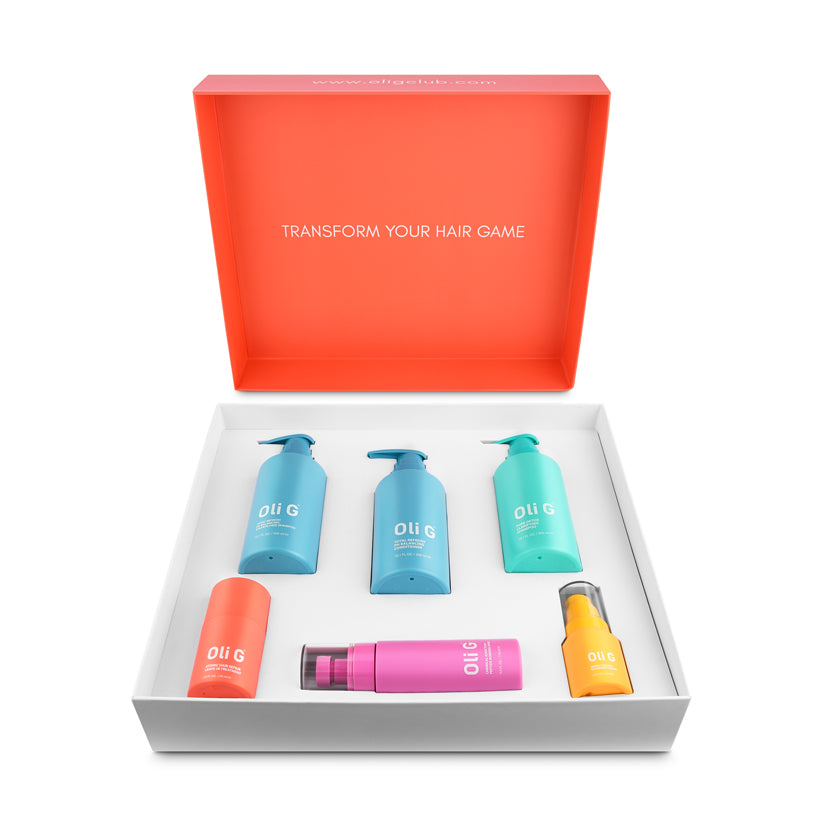
If you're new to layering treatments, the related read on the three categories of bond product walks through where a peptide leave-in like Atomic fits in the sequence.