Peptide is the most over-used word in haircare. Here's what it actually means, why molecular size matters, and what peptides can do that surface conditioners can't.
Walk into any salon and look at the back bar. Peptide will appear on most of the bottles. Peptide bond repair. Peptide-infused. Peptide-rich. Peptide treatment.
It's a useful word, which is exactly why marketing has worn it down. So before peptide becomes another generic ingredient claim on a label that does nothing, here's the actual chemistry — what a peptide is, why it works, and where it stops working.
The basics: amino acids, peptides, proteins
A peptide is a short chain of amino acids — usually somewhere between two and fifty of them, linked end to end. Amino acids are the building blocks; peptides are what you get when you chain a few together; proteins are what you get when you chain a lot.
The everyday version: amino acids are letters, peptides are words, proteins are paragraphs. All three are made from the same alphabet, but the size of the unit completely changes what it can do.
In hair, the relevant proteins are keratin — what your hair is mostly made of — and the various hydrolyzed proteins you'll see listed on shampoo and mask labels: hydrolyzed wheat, hydrolyzed silk, hydrolyzed keratin. Hydrolyzed means broken into smaller pieces. The smaller the piece, the more it starts behaving like a peptide rather than a full protein.
Why size matters more than the marketing says
Every hair strand has an outer layer (the cuticle) and an inner layer (the cortex). The cuticle is built like roof tiles — overlapping scales that protect the cortex underneath. Healthy hair has tightly closed cuticles; damaged hair has raised or chipped ones, which is what makes damaged hair feel rough and look dull.
The cortex is where structural integrity lives. It's also where the gaps form when hair is bleached, heat-styled, color-processed, or just lived in for a few years.
Here's the part that matters: surface conditioners can't reach the cortex. Their molecules are too large, designed instead to coat the cuticle, smooth it down, and rinse most of the way off. Hydrolyzed proteins sit in the middle — some get through, most don't. True peptides — the right size, the right charge — can pass through the cuticle and reach the cortex gaps directly.
That size difference is the entire story. Same chemistry family, different molecular weights, completely different jobs.
What peptides do once they're inside
Once a peptide reaches the cortex, it fills the structural gap it's matched to. Think of it less as glue and more as scaffolding — temporary structural support that lets the surrounding keratin reform around it. Over enough applications, the strand behaves more like its undamaged self: more elastic when wet, more resilient under heat, more pigment-retentive after color.
Beyond bond repair, peptides bring back elasticity and density at the strand level, not just on the cuticle. That distinction is why a true peptide-led formula behaves differently from a standard peptide bond system. Same word on the label, different molecules, different ceiling on what the strand can become.
Where peptides show up in the Oli G system
Three products in our lineup are peptide-led. Each works at a different layer of the routine:
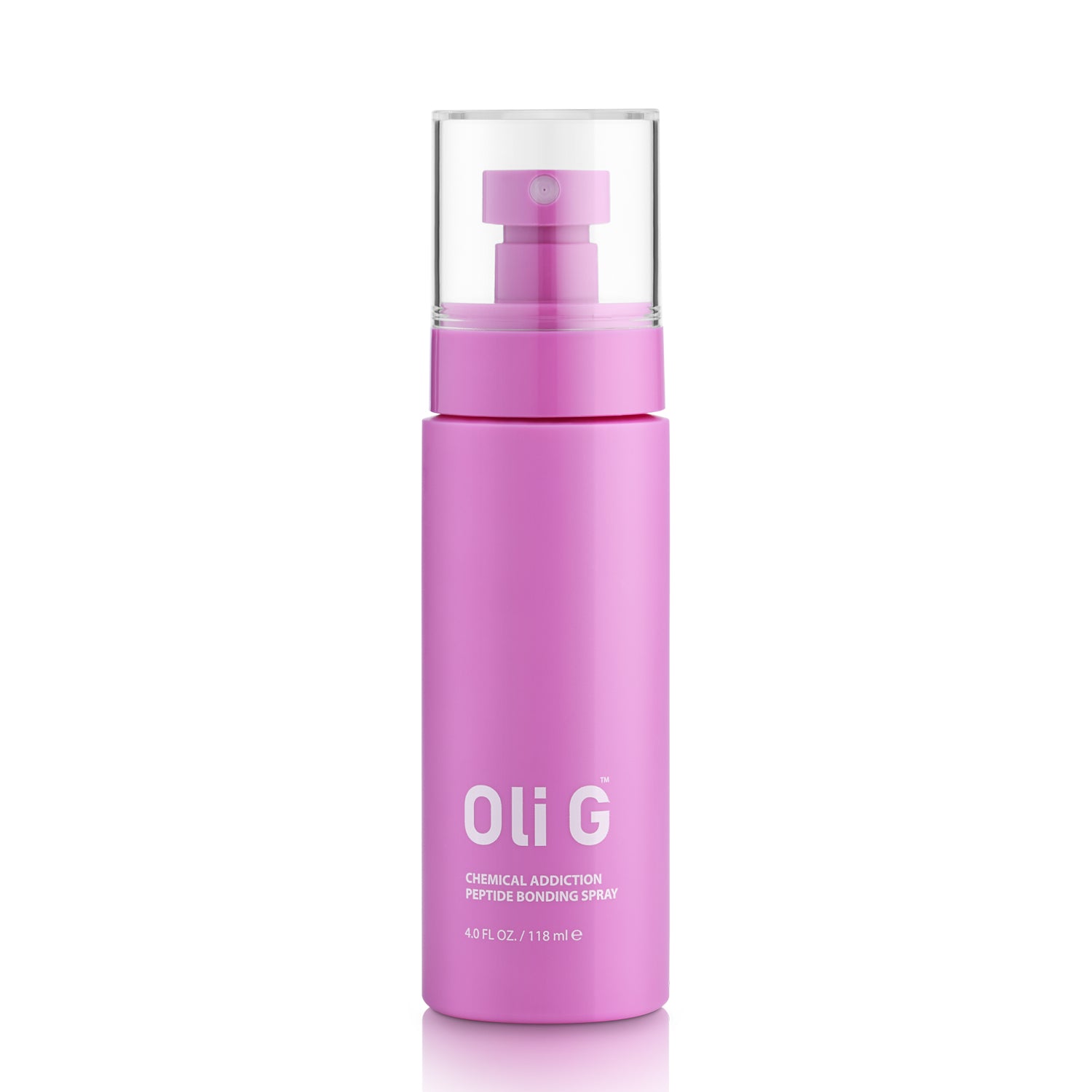
- 02 Protect · Chemical Addiction — a peptide bonding spray applied before heat styling and chemical service. The peptides bind in before damage has a chance to start.
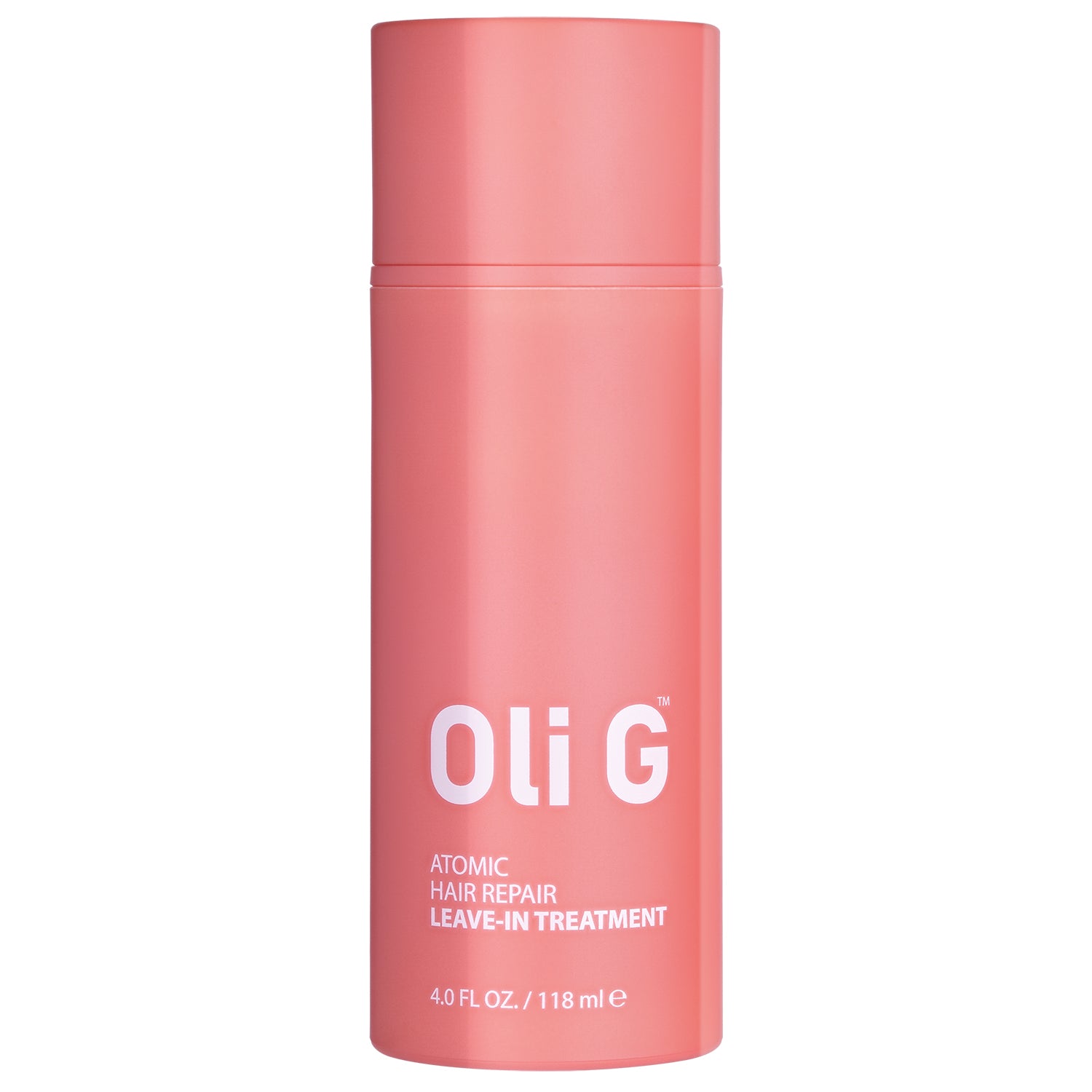
- 05 Restore · Atomic — a daily leave-in with two peptides. One built for cortex penetration, one for cuticle alignment. Applied damp, every wash.
- AquaLush — the weekly peptide fiber mask that replaces conditioner once a week. The deepest peptide intervention in the routine.
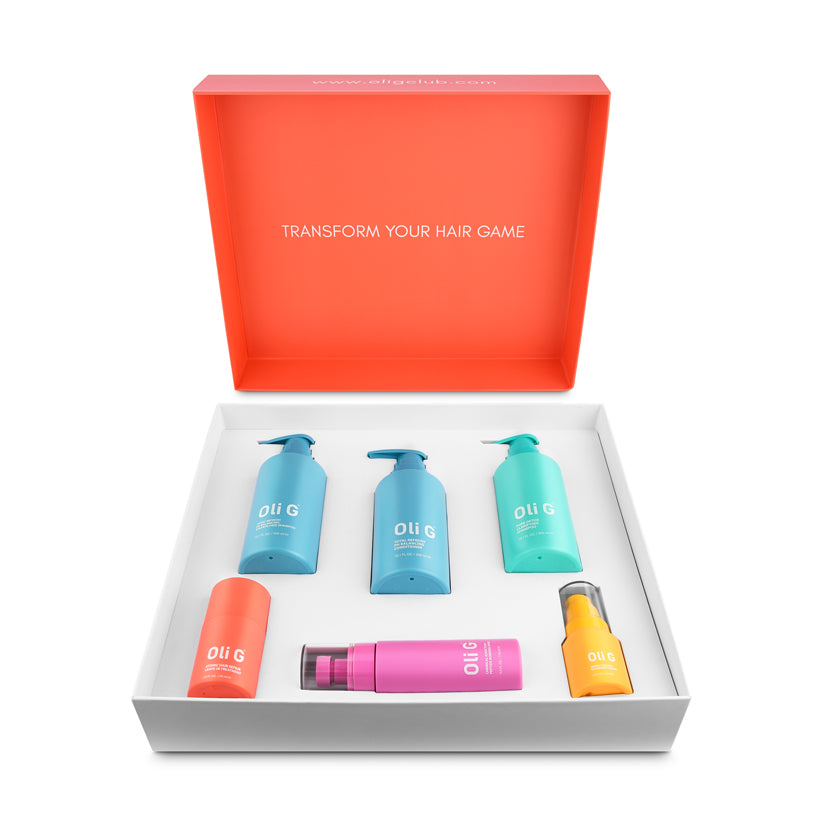
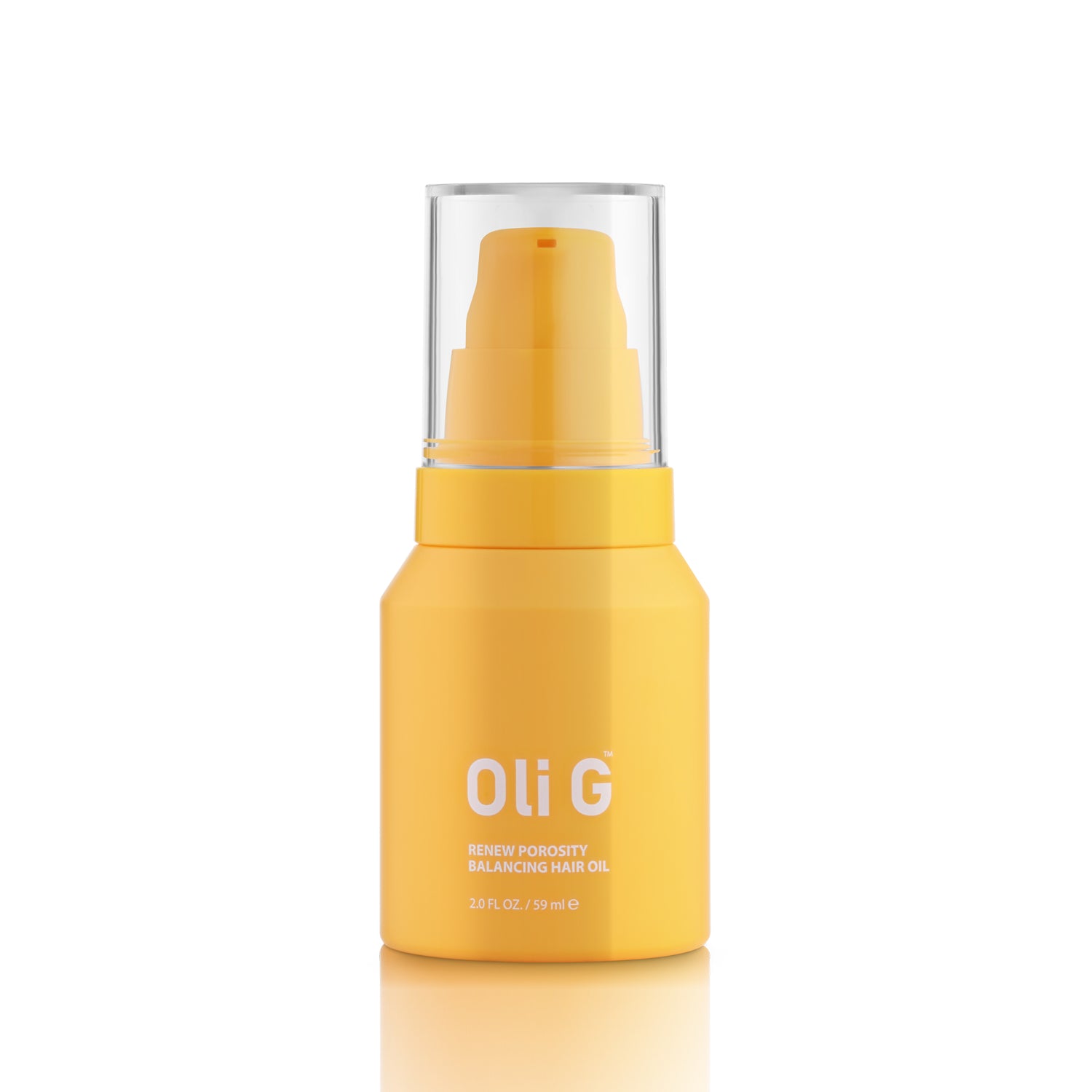
Five steps. One ritual. Seven products. Three of them are doing peptide work. The other four are doing the work that lets the peptides do theirs — 01 Cleanse with Pure Detox removes buildup that would block penetration; 03 Nourish with Renew seals in moisture so the peptides stay where they landed; 04 Balance with the Total Refresh duo keeps the pH steady so the cuticle behaves predictably between treatments.
What this means for your routine
If you're shopping haircare and you see "peptide" on the label, the question to ask isn't whether the formula has peptides — most do now. The question is which peptides, at what size, and at which layer of your routine they're meant to work.
A heat-protectant peptide is doing one job. A daily leave-in peptide is doing another. A weekly peptide fiber mask is doing the deepest one. They aren't interchangeable — and the right routine uses different peptide-led products at different layers, not the same one over and over. That's how you build the kind of compound result the strand can actually hold onto: more color, more elasticity, more shine, week over week.
05 Restore
Atomic Hair Repair Leave-In — a daily peptide leave-in. Two peptides, applied to damp hair every wash. The compound daily companion to AquaLush.
For the weekly companion piece, see AquaLush: Why Your Conditioner Deserves a Weekly Day Off.