The thing nobody on the bottle is telling you
The single most important factor in whether a haircare product actually works isn't the ingredient list. It's the pH.
Hair's cuticle is made of overlapping cells, arranged like scales. The cuticle has one critical behavior:
- Alkaline pH (above 7) opens the cuticle. Scales lift away from the shaft.
- Acidic pH (below 7) closes the cuticle. Scales lay flat against the shaft.
This behavior controls almost everything else about what hair products can do. Open cuticle = ingredients can enter the cortex. Closed cuticle = ingredients stay sealed in, moisture is trapped, color is protected.
Most haircare ignores this. Products are formulated at whatever pH is convenient for surfactant performance, fragrance stability, or shelf life. Not at a pH that synchronizes with what the cuticle needs to do.
Why this matters for peptides, proteins, and bond builders
If you're paying for peptide repair or bond-builder products, you're paying for active molecules to enter the hair fiber.
If the cuticle isn't open when you apply them, they sit on the surface and rinse off. The product technically contained the active ingredient. The active ingredient never entered your hair.
This is why a peptide mask labeled "deep repair" can underperform versus a less expensive product applied in the right pH sequence. The mask isn't the variable. The cuticle state is.
Hair's natural pH
Healthy hair sits at a pH around 4.5–5.5 — naturally slightly acidic. This is the resting state where the cuticle lays flat, the fiber is sealed, and the protective acid mantle is intact.
Damage moves the hair's surface chemistry toward neutral or alkaline. The cuticle lifts. Moisture escapes. Color washes out faster. Hair feels rough and looks dull.
A good daily routine includes products that match or slightly close hair's natural pH — keeping the cuticle in its resting position. A good treatment routine sequences pH deliberately — opening the cuticle when you want deposit, closing it when you want seal.
The cycle, in the order you use it
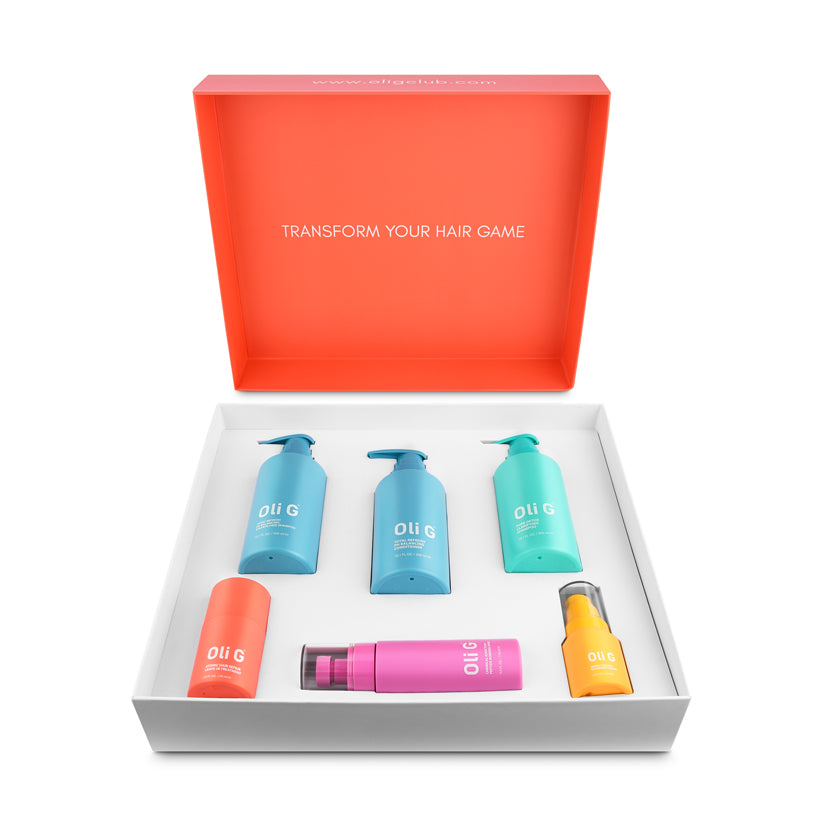
The Oli G system runs a deliberate alkaline-to-acidic sequence. A note on naming before the list: the 01–05 step numbers you see elsewhere on the site identify what each product is — they aren't an order of operations. What follows is the order you actually use them in, labelled with the same pillar names so nothing has two identities.
Cleanse — Pure Detox Clarifying Shampoo (pH 7.0–7.9). Alkaline. The cuticle opens. Hard water minerals, sunscreen residue, sweat, and weeks of product release from the fiber. Once a week, not daily.
Balance — Total Refresh pH Balancing Shampoo (pH 5.0–5.5). Inside hair's natural pH window. Daily wash that doesn't disturb the cuticle's resting position. Sulfate-free; color-safe.
Balance — Total Refresh pH Balancing Conditioner (pH 3.5–4.5). Acidic. Closes the cuticle the shampoo just opened (because all shampoos slightly open the cuticle, even gentle ones). Cuticle lays flat. Hair reflects light — that's what "shine" is.
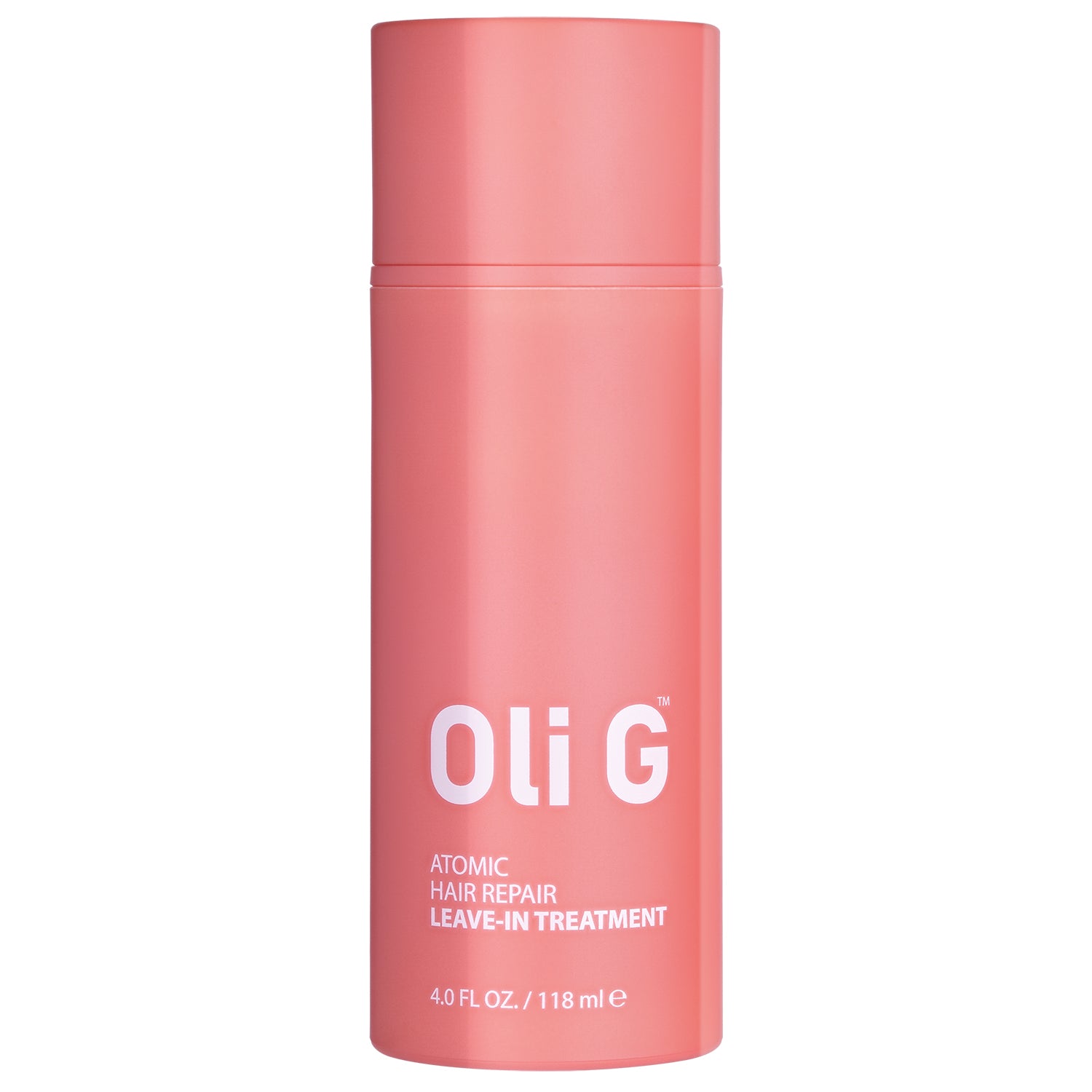
Restore — Atomic Hair Repair Leave-In (pH 7.0–8.0). Alkaline. Deliberate. The cuticle opens. Peptides, amino acids, and silicon-bonded plant protein enter the cortex while the cuticle is in its receptive state.
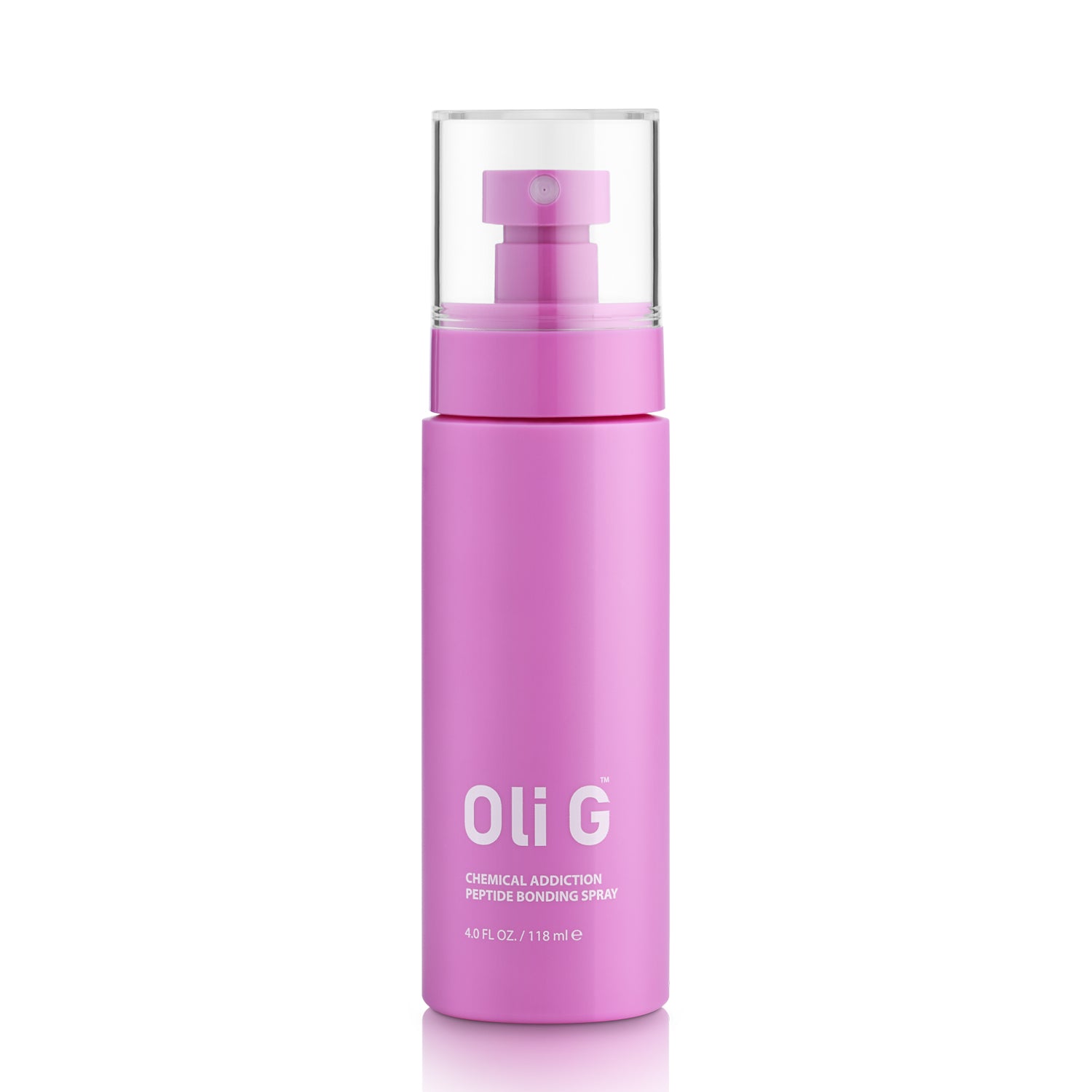
Protect — Chemical Addiction Peptide Bonding Spray (pH 3.5–4.6). Acidic. Closes the cuticle around everything Atomic just deposited. This is the step most peptide brands skip. The peptide is applied, but never sealed in.
+ Weekly. Hydrate — AquaLush Peptide Hair Mask (pH 7.0–8.0). Alkaline. Same window as Atomic. Floods the open cuticle with a deeper concentration of peptides, proteins, amino acids, and botanical lipids. Once a week, replaces conditioner.
Where Renew fits — and why it has no pH
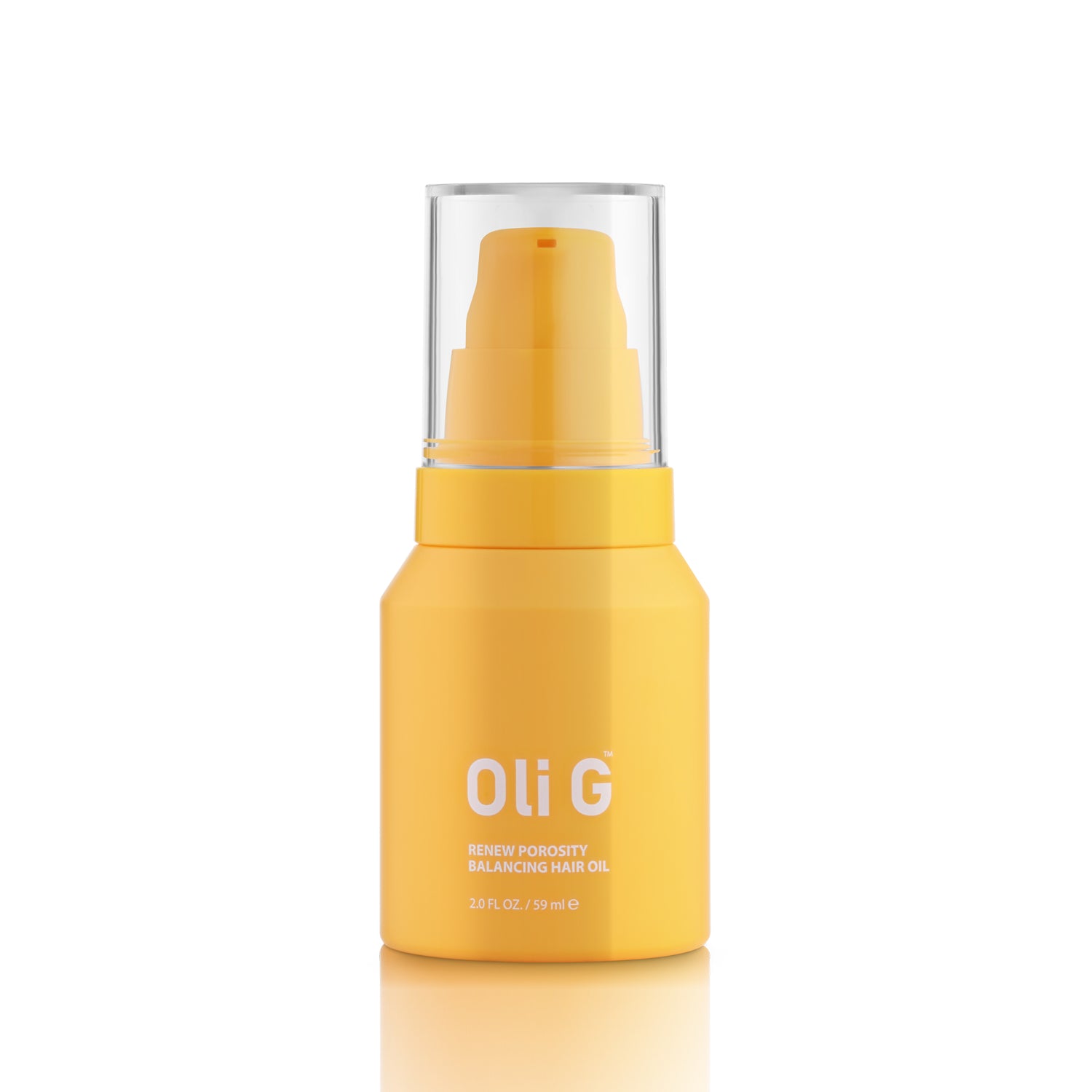
You won't find Renew Porosity Balancing Oil anywhere in the sequence above, and that's deliberate.
pH only exists in water. Renew is an anhydrous oil — there's no water phase in it, so there is no pH to measure, balance, or disclose. Any brand printing a pH on a pure oil is telling you something that can't be true.
Renew works on a different axis entirely: the lipid layer, not the cuticle's acid-alkaline state. It goes on damp ends after everything else, sealing in the result of the cycle rather than participating in it. In the five-step system it's 03 Nourish. In the shower, it's simply last.
Why opening then closing then opening then closing works
The instinct is: "Opening the cuticle is bad, you should keep it closed."
That's only true at rest. During washing and treatment, opening the cuticle is the only way to get ingredients inside the cortex. The problem isn't opening — the problem is leaving it open.
The cycle is sequenced so that wash opens the cuticle gently, conditioner closes it back, treatment opens it deliberately for the active to deposit, and the sealing step closes it around the deposit. End state: cuticle closed, deposit inside, moisture and active sealed.
A product that opens the cuticle but never closes it is a product that gave you a brief deposit and then let it wash off.
What about pH-balanced shampoos generally?
Most "pH-balanced" shampoos sit at pH 5–6, which is fine for daily cleansing. The problem is what comes next. If the conditioner is at pH 5.5–6.5 (close to neutral), it doesn't actively close the cuticle — it just doesn't open it further.
To close the cuticle, you need an actively acidic conditioner — pH 3.5–4.5. Most aren't.
This is one of the most common failure modes in haircare: a "pH-balanced" lineup that doesn't cycle pH, just sits at neutral. Hair stays at its damaged pH. Cuticle stays slightly raised. Shine and softness are short-lived.
What about Apple Cider Vinegar rinses?
ACV rinses (typically pH 2.5–3.5) are an old-school approach to acidic cuticle closing. They work. They're also harsh enough that frequent use can dry hair and irritate scalp.
A pH 3.5–4.5 conditioner does the same job more gently. ACV rinses still have a place — occasional reset for hair that's been over-conditioned with neutral or alkaline products — but as a routine they're harsher than needed.
The bottom line
Ingredients matter. pH matters more. A modest peptide concentration in a properly pH-sequenced system outperforms a high-concentration peptide in an unsequenced system.
This is why Oli G is built as a system, not as a hero product. The science is in the architecture, not just the bottle.
Read the full pH cycle page → | Shop the system → | Read about oligopeptides →